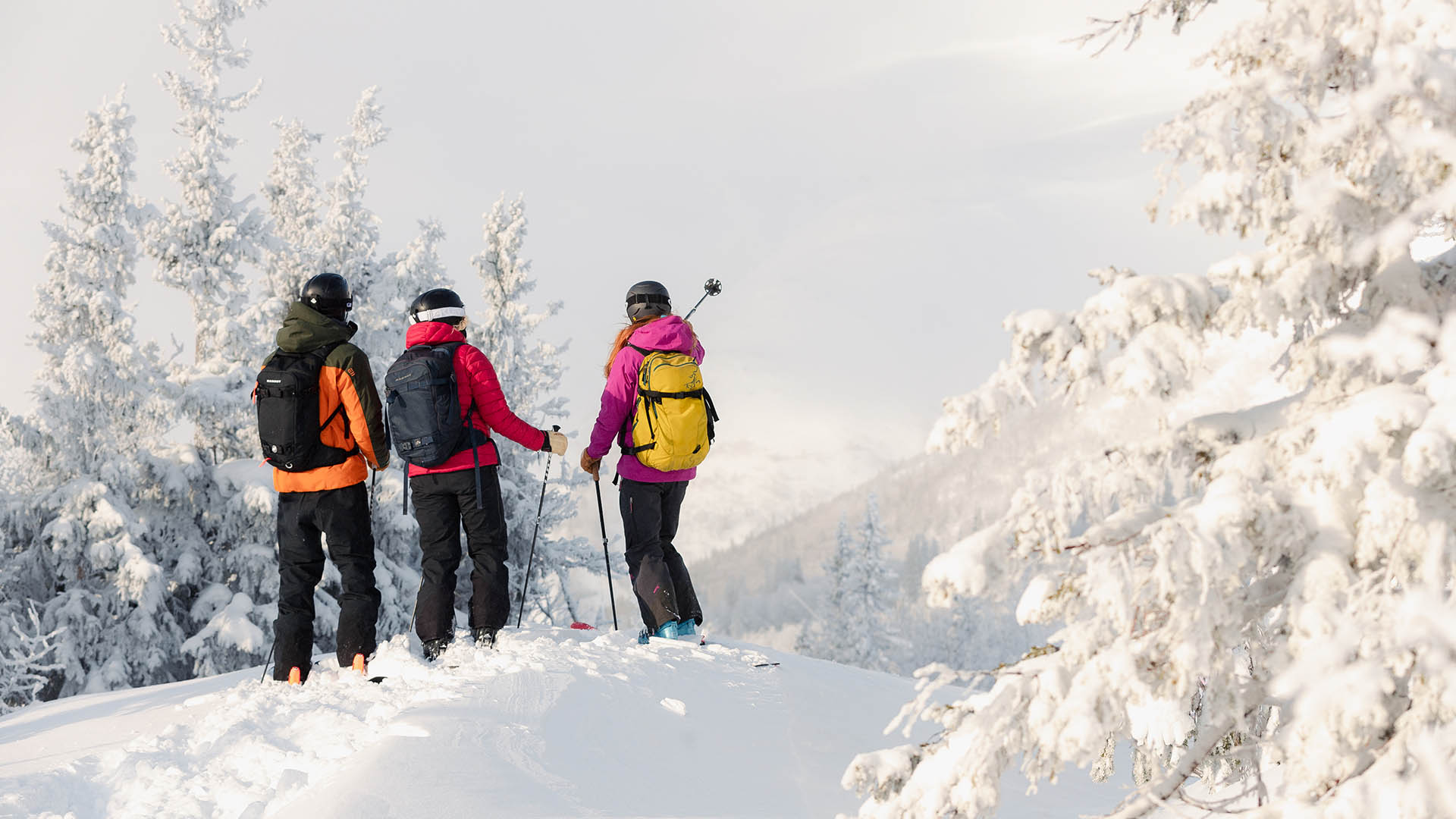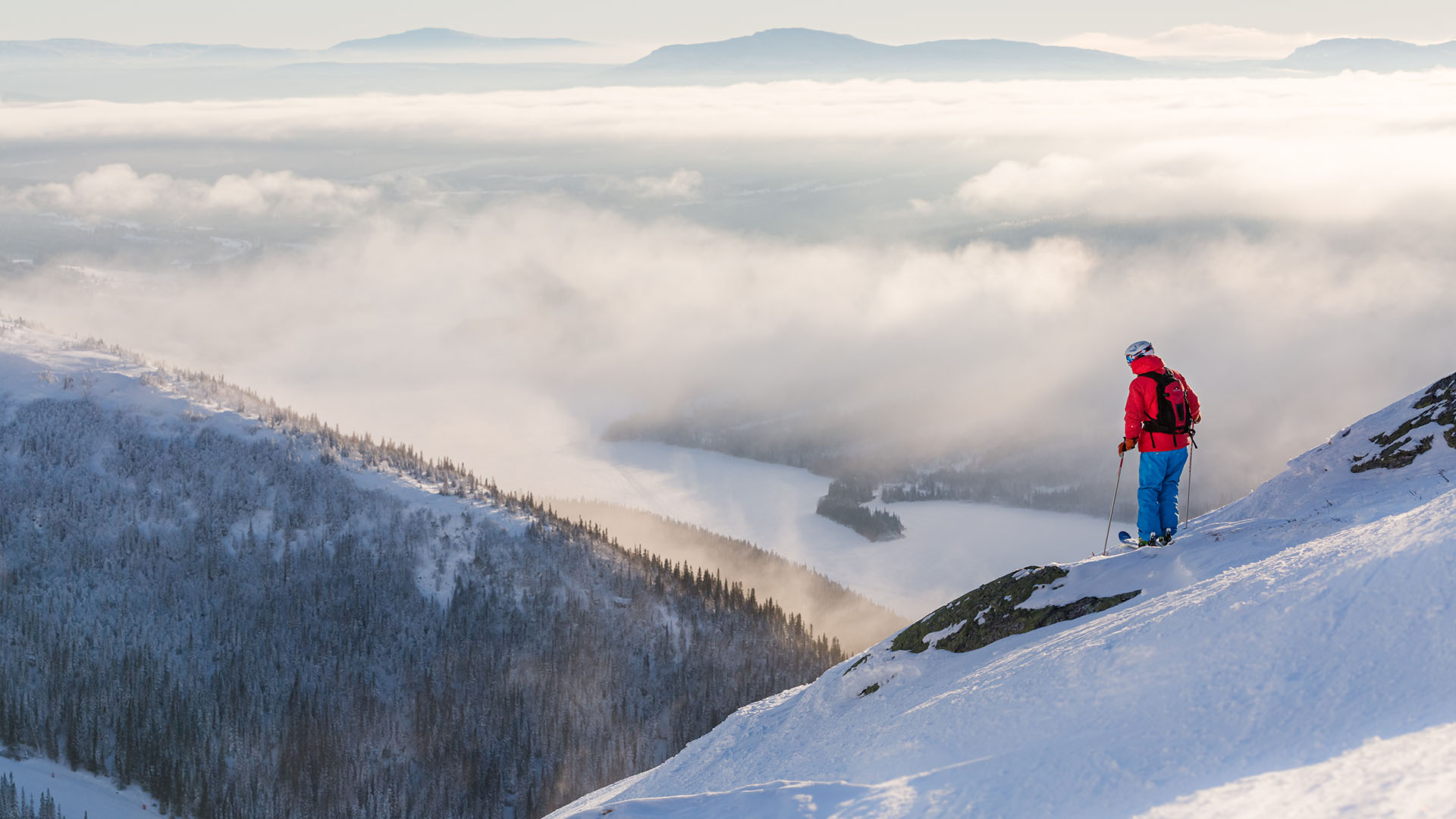
Avalanches are a natural part of the mountain environment in Åre and something everyone venturing beyond the groomed slopes needs to understand. With the right preparation, equipment and knowledge of avalanche risk, you can make better-informed decisions and enjoy safer experiences in the mountains.
Here you will find daily information on the avalanche situation from SkiStar for Åre/Duved >>
1. Read up
The Swedish Mountain Safety Council has a good section on avalanche safety. Here you will find general facts, how avalanche terrain is typically classified in Sweden, how to measure slope steepness, how route choices should be made, videos, and what to do if an avalanche occurs. Also see SkiStar's daily information above.
2. Be equipped
Most people rescued and dug out of avalanches are saved thanks to companion rescue. A minimum of equipment required for traveling in avalanche terrain is knowledge, a transceiver, a shovel, and a collapsible avalanche probe. If you don't own this type of equipment yourself, you can borrow it from a friend or rent it (a number of companies in Åre offer avalanche equipment rental). Also, make sure you have plenty of battery capacity in your transceiver and test that it works with your companions' transceivers before you set off.
3. Be prepared
It's one thing to read up on knowledge. Another to practice it. Åre Avalanche Center offers shorter and longer courses at various levels throughout the winter season. There you will also find current information on the avalanche situation.
4. Practice with your equipment
If someone is buried in an avalanche, everything depends on those nearby who can help rescue the person. There is little time for someone under the snow with limited air to breathe. If an accident were to happen, you want the rescue operation to be automatic. The procedure should ideally be second nature. When snow conditions permit, there is an avalanche search practice area above Åre Avalanche Center's office in Stjärnbacken. You can also bury avalanche transceivers in any snowfield and take turns with a friend to find them.
5. Stay informed
On the Swedish Environmental Protection Agency's website lavinprognoser.se, avalanche hazard assessments for Storulvån and Åre are updated daily, and SkiStar updates its information daily here.
6. Keep track of the avalanche risk
All ski areas daily indicate the avalanche hazard for areas outside the marked slopes in the ski system. The avalanche hazard is given on a five-point scale where 1 stands for Low risk and 5 for Extreme risk. For Åre and Duved's ski systems, the situation is continuously updated on SkiStar's website. The avalanche hazard can change during the day, so it's important to continuously check the situation.
7. Act responsibly
Avalanche forecasts and reports provide an indication of the general situation outside the slopes. But it is you who makes the decision to go or not. Make sure your decision is the right one.
Read more about Åre's ski area here.