Fishing
In the right waters, with the right gear and bait, tonight’s dinner is almost guaranteed to be freshly caught. Most likely, it’ll be a trout or char, but lurking in Årefjällen’s deep waters you’ll also find pike, grayling, perch, whitefish and the occasional burbot. Here, we’ve gathered all the information and tips you’ll need to discover your perfect fishing spot, where to get a fishing permit and general advice. Tight lines!
Fishing in Åre – a brief overview
The fishing around Åre is both rich and varied, with some of Sweden’s most productive trout waters. Many of these fishing spots lie close to the source of the Indalsälven, fed by pure mountain water. This means cool temperatures that are perfect for the fish, with plenty of oxygen thanks to the brisk mountain climate and regular rainfall. The rivers are carefully maintained by the County Administrative Board, which digs spawning pits and places stones and logs to improve the habitats.
Around two million Swedes are sport anglers, and if you’re keen to fish in the waters around Åre and western Jämtland, you’ll have a lifetime’s worth of fishing before you’ve seen and done it all. If you’re sharing the day’s plans with the rest of the family, there are plenty of nearby waters to choose from. But if you’ve got free rein and want to find that perfect fishing spot far from the crowds, there are truly endless places to explore – even if they might require a bit of a trek to get there.
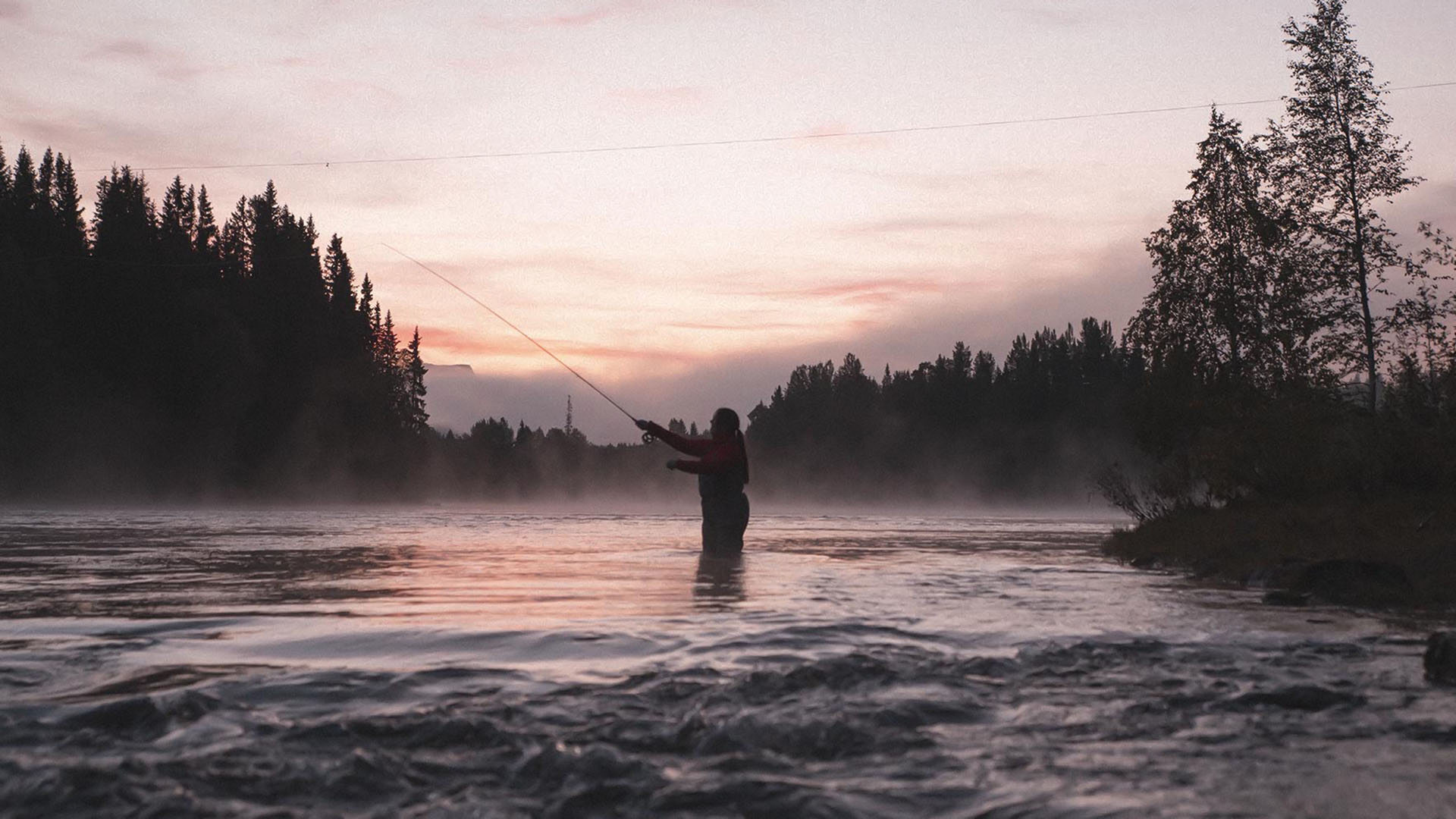 Fly fishing in Brattlandsströmmen.
Photo: Sara Rönne
All of Southern Årefjällen has prime fishing waters available with a state fishing permit. Because these spots are often far from the nearest road, you’ll find plenty of space if you’re after peace and solitude. In the waters around Åre, just about anything bites: perch, pike, whitefish, grayling, and of course, arctic char and trout. The average weight for trout is around half a kilo, with the best chances for bigger fish coming in August, when the trout head upstream to spawn. For the best results then, think tiny dry flies or big streamers.
From mid-May until Midsummer, you’ve also got a shot at catching trophy-sized trout as they chase spawning minnows. There’s even more opportunity with streamer fishing before the big dry-fly hatches get going. The stonefly hatch typically kicks in the week after Midsummer and can last up to a month, depending on the temperature shifts.
Fishing rules and recommendations
To fish in a certain body of water, you need permission from the owner and a fishing permit grants you the right to fish. If there’s no fishing permit available, you need to obtain permission directly from the owner. It’s your responsibility to find out the rules before you cast your line. Waters can either be state-owned or belong to private fishing areas managed by other operators, and therefore, regulations and where to apply for fishing permits can vary from one area to another. It’s your duty to know the specific rules for the area you plan to fish in.
iFiske
Here you’ll find much of what you need to know about fishing regulations in Jämtland. The list and map show connected fishing areas throughout the region, and on each area’s page, you’ll find local information about rules, recommendations, and more:
Ifiske – Jämtland
The County Administrative Board (Länsstyrelsen)
Here you’ll find general information and rules about recreational fishing:
County Administrative Board of Jämtland, general rules.
For more information on mountain fishing in Jämtland:
Mountain fishing in Jämtland.
Talk to Fjällsport
If you’re unsure and want to speak with local fishing guides who know the waters, feel free to visit Fjällsport in Duved.

Catch and release
For those practising catch and release in the waters around Åre, the minimum size limit is generally 25–30 cm. There is no official maximum size requiring you to release a fish, but the recommendation is to return any fish weighing more than 2 kg to the water to help maintain healthy fish populations.
Handle the fish gently and don’t fight it too hard. This is especially important when the water temperature is high. When hooked, the fish is fighting for its life and can quickly become exhausted. Keep it in the water and give it time to recover before releasing it.
The struggle causes a build-up of lactic acid in the fish, leading to exhaustion that can ultimately be fatal. By keeping the fish in the water and allowing it to recover and take in oxygen before releasing it, you reduce the risk of it dying from the effects of the fight.
Avoid lifting the fish out of the water any more than absolutely necessary. If you need to handle it, make sure your hands are wet. This helps protect the fish’s protective slime coating, which plays an important role in defending it against disease and infection.
If you need to handle the fish out of the water, be mindful of how you hold it. Larger fish weighing over 2 kg rely on the pressure of the water to support their bodies, and out of the water there is nothing to support the belly. Place one arm underneath the fish to support its body, and make sure it has recovered and is swimming strongly before you let it go.
Tips from the expert
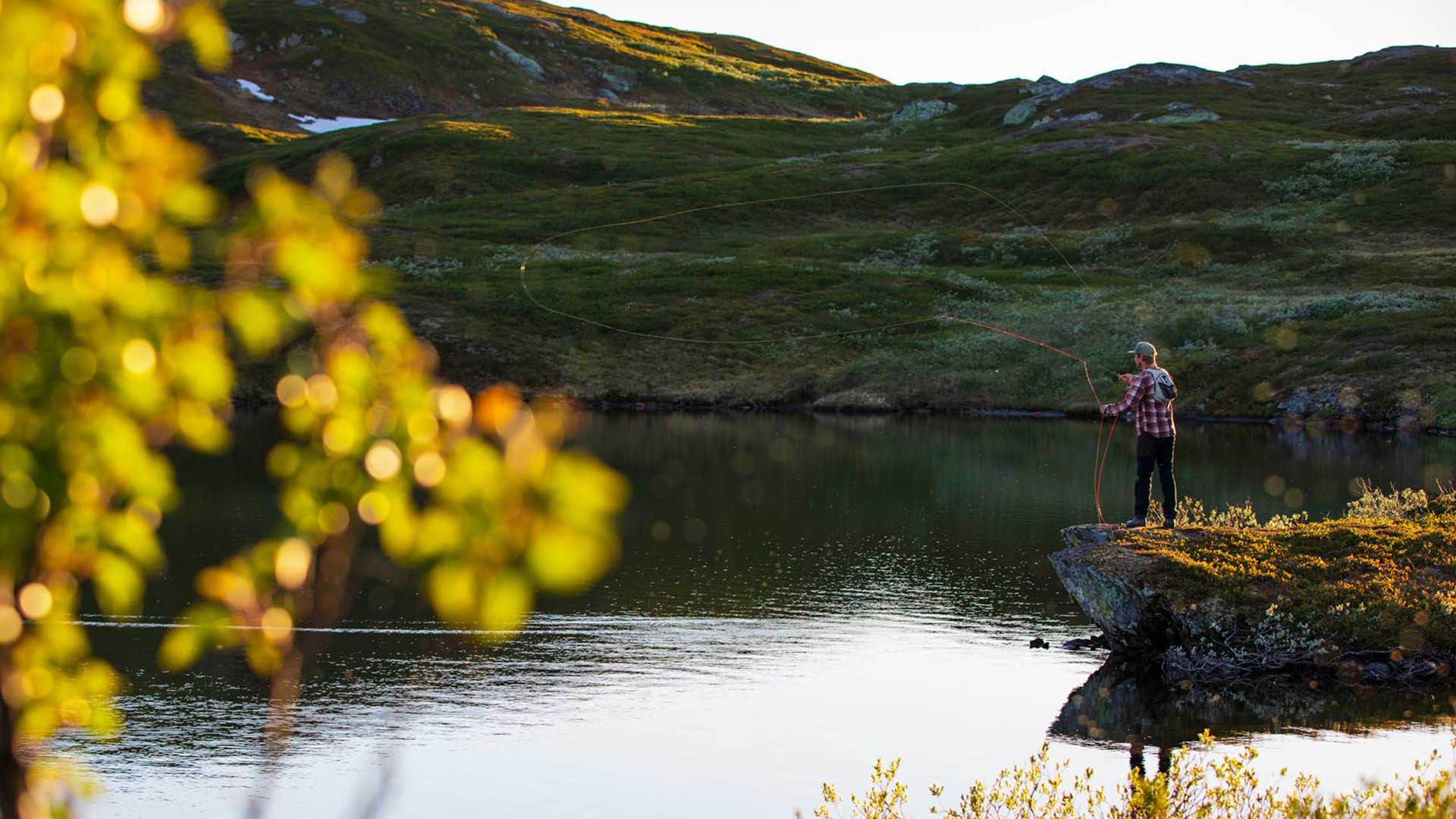
In the Åre area, anglers gather at Fjällsport in the heart of Duved. Here you’ll find fishing gear and insider tips, as well as the opportunity to book guided fishing trips and courses. Max Olofsson, owner of Fjällsport in Duved, has fished the waters around Åre all his life. He says you can enjoy great fishing all year round, but if you fish without a plan, you’re likely to catch mostly smaller fish. “There are always bigger fish where the food is – they’re just harder to catch,” he says.
Baits for mountain waters
The most common question at Fjällsport is what the fish are biting on. The answer is always: “It depends.” Fly fishing or spinning? Where are the insects in their life cycle? If there’s no activity on the surface, the recommendation is usually to try streamers and baitfish imitations. But Max also shares a few more specific tips:
“Up here, the fish go for midges, large mayflies and black-and-red Zonkers. For spinning, try Lill-Sigge lures, copper spoons and spinners. Whatever type of fishing you prefer, make sure you have a variety of colours, shapes, weights and sizes,” says Max.
You’ll find Fjällsport and Max’s tips for nearby fishing spots a little further down the page.

Fish with a guide
Regardless of whether you’re an experienced fisher, a beginner or anything in between, a guided tour is a great experience. It’s not always easy to find the right spots or know what bait or which gear to use. A guide can help you with all of that, especially as they know every rook and eddy in the local waters.
Here are a few tips on where to find your local fishing guide:
Trillevallen in southern Årefjällen
The companies below to find your perfect fishing adventure and for other fun activities to fill your days in Åre.
Explore companies
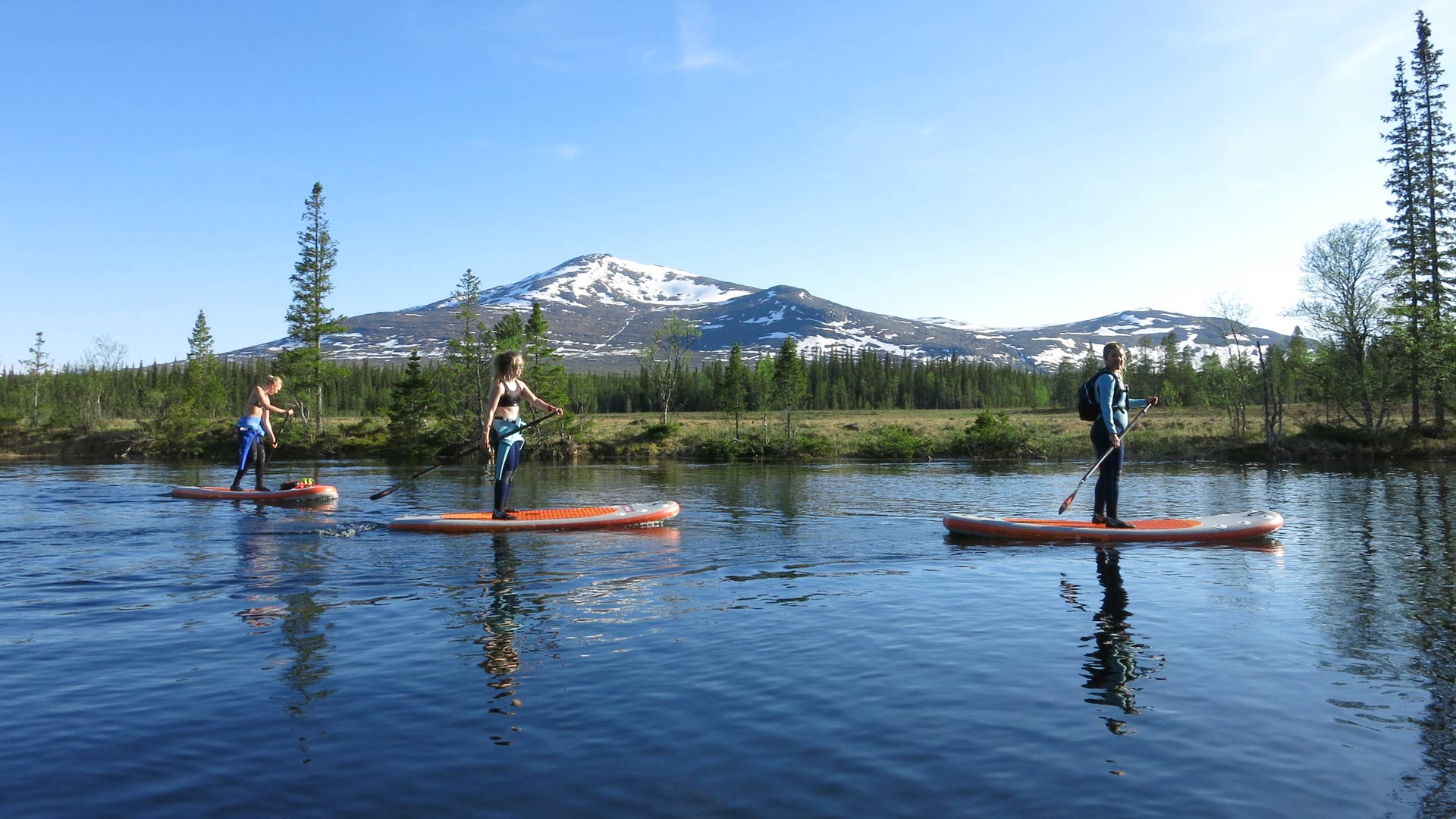
Åre Nature Adventures
Guided adventure tours all year round. Summer: SUP, moose safari, fishing. Winter: snowshoeing, snow quad, dog sledding, northen light tours.

Explore Åre
Explore Åre offers a wide range of adventures from traditional activities such as fishing & snowshoeing to snowbiking, zorbing & SUP.
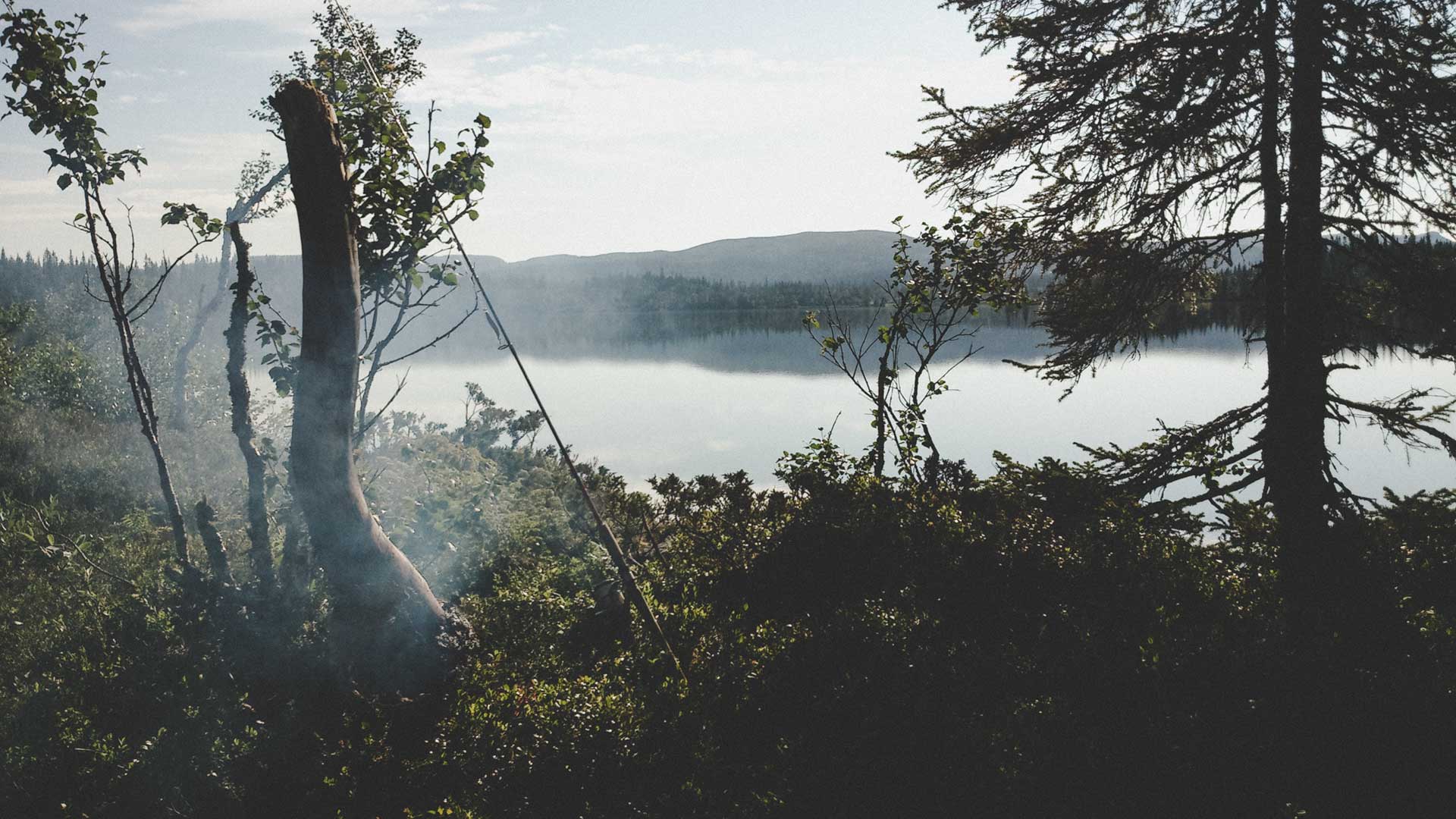
Fjällsport
Sports- and fishing store with a wide range of articles. Fishing licenses and boat rental. During summer guided fishing tours and fly fishing courses.

Åreguiderna
Wide range of activities. Summer – downhill, XC, fly fishing, hiking & SUP. Winter – offpist, cross country skiing, snowmobile tours & snowshoeing.