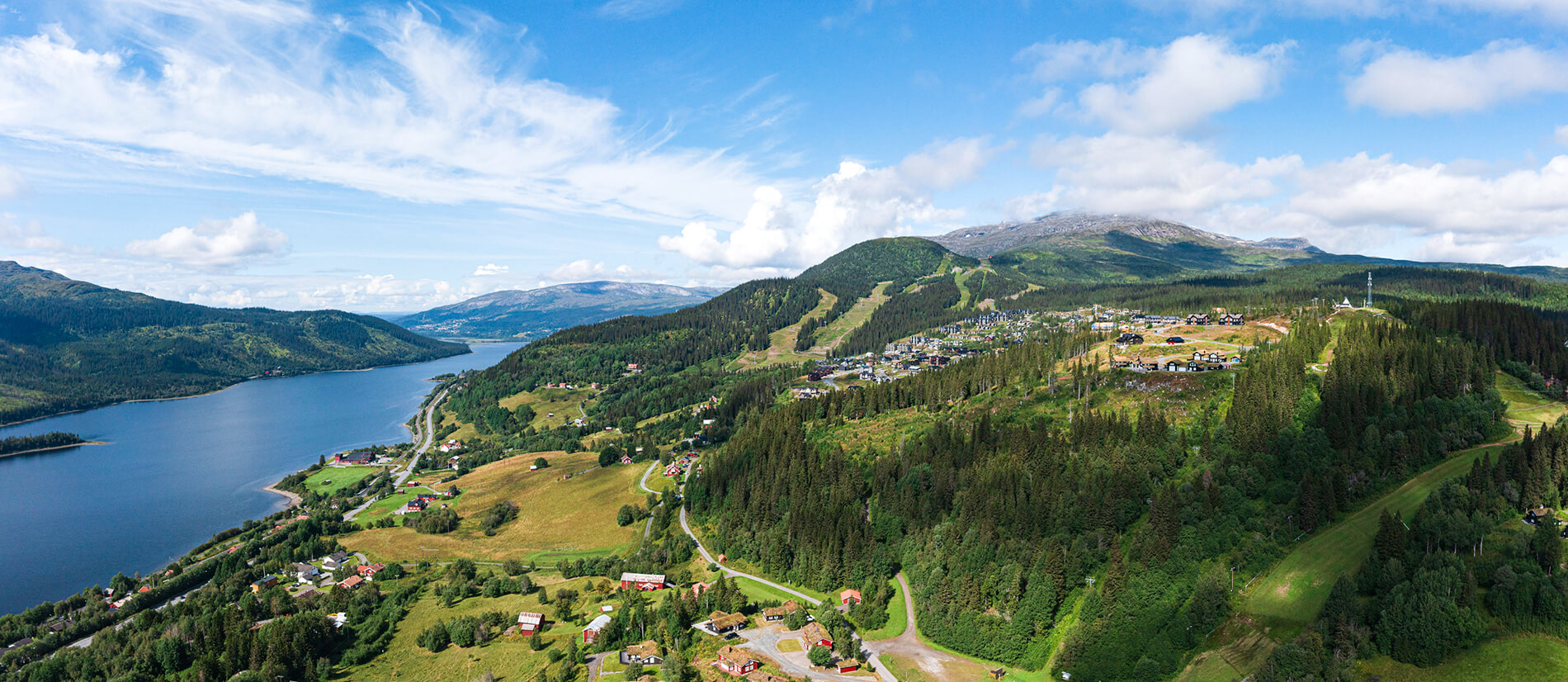
The 580 kilometer long St. Olav’s Way stretches from Selånger outside Sundsvall at the east coast of Sweden to Trondheim (ancient Nidaros) at the western coast of Norway.
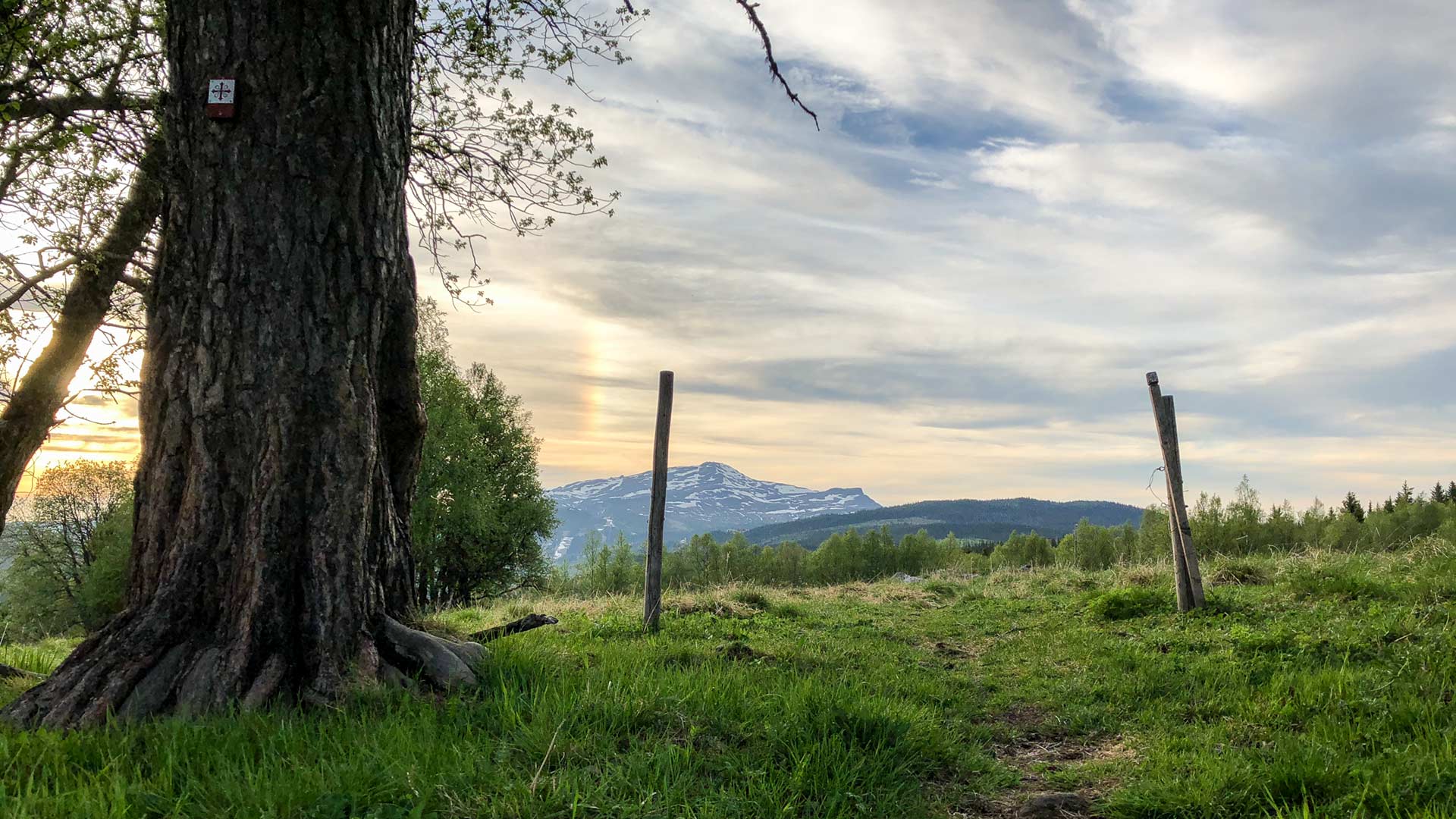
One of the best ways to experience St. Olav's Way near Åre is to hike the scenic stretch between Undersåker and Såå. The trail winds through peaceful forests and open meadows above the E14 before descending to follow the old road toward Vik. From there, it climbs gently back above the highway as you make your way into the heart of Åre. Along the way, don't miss Åre Old Church, where a beautifully carved wooden figure of St. Olav offers a glimpse into the rich history of this centuries-old pilgrimage.
Past rushing rapids and a historic church
Continuing west, the trail follows the old road toward Duved before turning onto a gravel road south of the railway, leading to the roaring Tegeforsen waterfall, where it joins the old road once again. In Duved, you'll pass Duved Church on your way to Duved Skans, a historic fortress dating back to the 17th century. A short stretch follows the E14 before the route turns onto Skalstugevägen, continuing toward the Norwegian border. Along the way, don't miss the beautiful stone arch bridges that line the old mountain road—historic landmarks well worth the journey in their own right.
Facts: St. Olav’s Way stretches 580 km from Selånger, outside Sundsvall, to Nidaros Cathedral in Trondheim, Norway. In the Middle Ages, it was one of the world’s four major pilgrimage routes, alongside those leading to Jerusalem, Rome, and Santiago de Compostela. Walk at least 100 km—or cycle 200 km—and you can collect an official pilgrimage certificate in Trondheim. Everything you need to plan your journey can be found at stolavsleden.com.
Facts 2: Kung XIV Johan ordered the restoration of Skalstugevägen to improve travel between Sweden and Norway, the two countries under his rule. The work took place from 1820 to 1835 and included the construction of 19 beautiful stone arch bridges. Several still stand today, adding even more character to this historic mountain road.
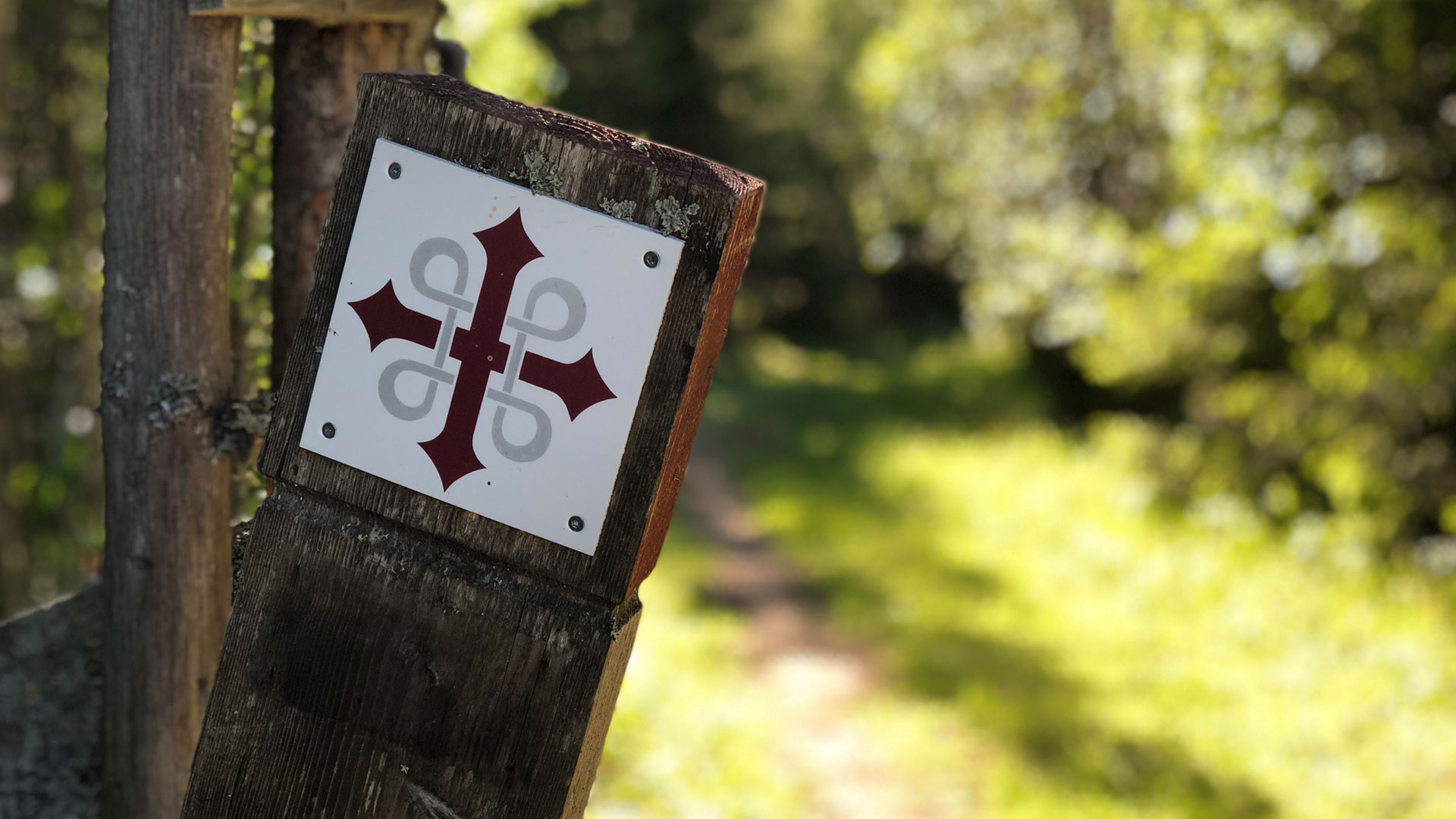 The symbol for St Olav's Way.