During the late summer and autumn, the mountain crackles in all sorts of colours, the air is clear and nature’s pantry is right at your feet. Although it is difficult to look away from the beautiful views, do so anyway. Move your eyes down towards the ground where you stand – the mountain is a real gold mine.
Mushrooms
The mountains are home to a unique variety of edible mushrooms, growing everywhere from mountain birch forests to open alpine heath. You'll find boletes, milkcaps, gilled mushrooms, hedgehog mushrooms, and much more, but we've highlighted a few of the easiest varieties to recognize. If you're eager to discover even more, why not join a mushroom foraging course? It's a fun and rewarding way to learn something new while exploring the outdoors.
- Chantarelles are truly nature’s most brightly shining stars. Yummy, healthy and great to have in your freezer for making stews and soups. In late summer, the yellow chanterelles pop up in, well, not so easy to find-places. But if you flirt with the right locals you might get a hint about where to look. You ought to get over 700 height meters to have the greatest chance to find chanterelles in Åredalen.
- Sometime later in the fall, it’s time for the funnel chanterelles. The trick is to find one, and when you do they’re usually spread out as a carpet beneath your feet. Fantastic to dry and put in glass jars then crumble them in your autumn and winter’s soups and stews.
- The saffron milkcap is easy to recognize because it releases a carrot-orange "milk" when the cap or stem is broken. It's delicious in stews, sauces, or simply sautéed and served on toast, and is most often found growing in spruce forests.
Please remember: If you have the slightest doubt of whether you’ve picked an edible mushroom or not, do not try it. Poisonous mushrooms can be seriously dangerous.
Cloudberries
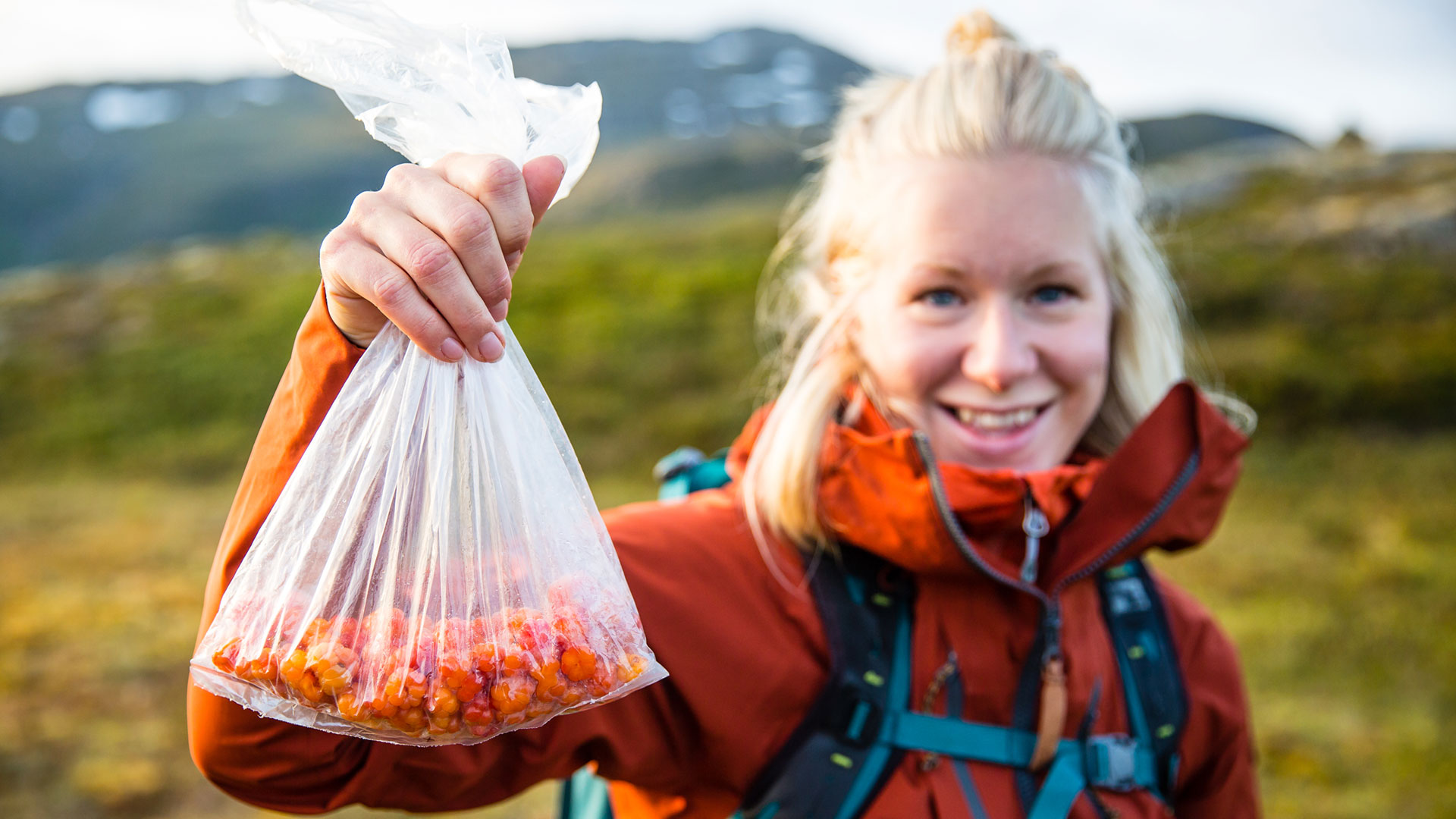
Meadow’s gold is what we call it, for when cloudberries mature it glitters like gold across every mountain meadow. With loads of flowers blooming, summer promises a fine cloudberry harvest and the first berries can be found where the sun has been shining. Higher up on the mountains, the berries ripen a little later and the further away you get from the most easily accessible places, the greater the chance you’ll have to fill your buckets. Divinely good and super-healthy too!
Other berries
- Blueberries might not need a very elaborate introduction. You’ll find ripe blueberries in the forests, but also on the mountains in various places. Put them in the freezer and take them out to put on your yoghurt or make into a smoothie whenever you need a burst of vitamins.
- Raspberries ripe in middle to late summer and they’re a complete dream to have in your freezer to take out during wintertime. Make them the topping on your cake, put them on your ice cream or just munch them as they are. Raspberries grow wild in deforested areas, ditches and actually in rather random places as the plants spread easily.
- Lingonberries have a rather sour taste compared to the two examples above. But lingon berry jam is delicious on meatballs, and they are a great addition to your smoothie or juice. You’ll find them growing on the moors and in the forests.
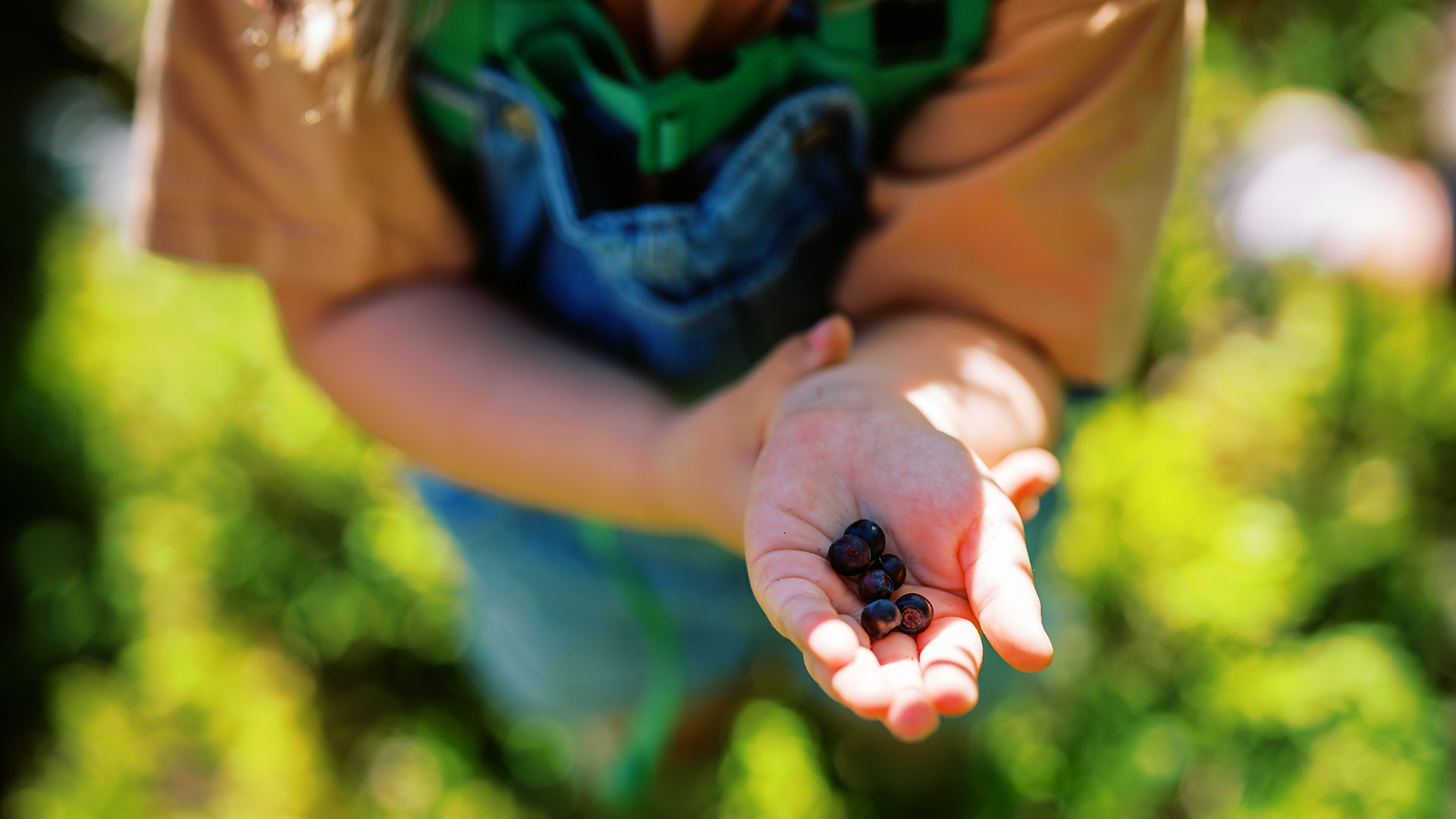 A trail snack straight from nature's pantry.
Photo: Darren Hamlin
Know what’s allowed
Thanks to Sweden's Right of Public Access, you're free to pick wild flowers, berries, and mushrooms in most places. However, some plant species are protected and must not be picked. There are also a few exceptions—spruce tips and truffles (which, as far as we know, don't grow around Åre) belong to the landowner. You should also avoid picking berries or other plants on private property. Different rules may apply in national parks and nature reserves, so it's always a good idea to check the local regulations before heading out to forage.
Take a moment to learn about Sweden's Right of Public Access and how you can help protect the nature you're here to enjoy.