History
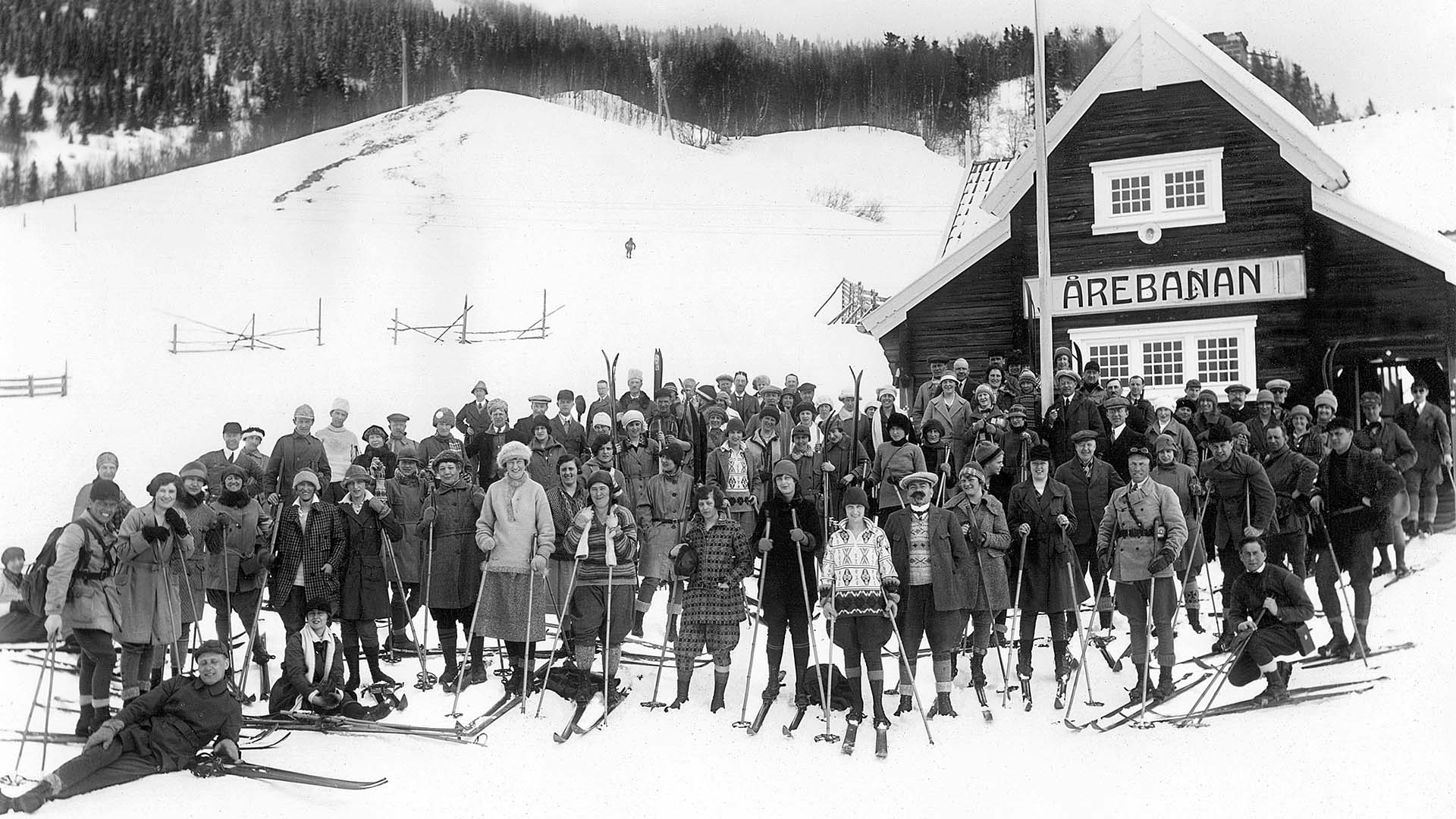
Photo: Nils Thomasson / Jamtlis fotosamlingar
From health retreat to alpine champion destination
Today, Åre is known for its ski slopes and the big-city buzz that kicks into high gear during the winter season. But Åre’s history as a destination goes back a long way. As early as the 12th century, thousands of pilgrims from across Europe stopped in the village on their way to the grave of Saint Olav in Nidaros, present-day Trondheim. And the story continues from there. Step by step, Åre evolved from a stop along the pilgrimage route to a mountain health retreat, and eventually into the alpine powerhouse and summer destination it is today.
Early Åre
What we know as Åre today was originally several small villages—Totten, Lien and Mörviken—where farming, hunting and fishing shaped everyday life. Over time, the villages grew together to form the larger community of Åre.
The pilgrimage route to Nidaros
During the Early Iron Age, a trade route ran through Åredalen from Medelpad in the east to Trøndelag in the west. But after 1030, a new kind of traveler had reason to stop in Åre on the journey west.
That year, Olav Haraldsson marched toward Norway in an attempt to reclaim the Norwegian throne, but was killed in the final battle at Stiklestad on 29 July. After his death and burial, a number of strange and unexplained events were said to have occurred. This led to his canonization in 1031, when he became known as Saint Olav.
Pilgrims soon began following in Saint Olav’s footsteps from Sweden’s east coast toward Nidaros, passing through Åredalen and stopping here along the way. The oldest part of Åre gamla kyrka was built in the late 12th century, close to Åresjön and the village of Totten, and became a natural gathering place for these long-distance travelers.
Botanists and visitors in search of fresh mountain air
It would be some time before the next major wave of visitors arrived in Åredalen. But in the mid-19th century, as Sweden was becoming increasingly industrialized, interest in the fresh mountain air and natural beauty of the Swedish mountains began to grow.
The so-called blomsterherrar—gentlemen botanists—traveled here to study the geology and flora of the mountains. They were joined by the first luftgäster, or “air guests.” At first, these were people with lung conditions who had been prescribed time in the Swedish mountains to benefit from the invigorating mountain air. Later came affluent middle-class visitors looking to rest, recharge and socialize.
They were followed by anglers and grouse hunters, often traveling from Scotland, England and southern Sweden. Their visits led to the construction of hunting lodges between around 1880 and 1915, including Skalstugan and Rensjösätern.
Many of these early visitors helped establish the paths that would eventually become some of Åre’s major hiking trails, while also sparking a wider interest in Sweden’s mountain landscapes.
The arrival of the railroad – the beginning of modern Åre
The next major turning point for Åre as a destination came with the opening of the railroad in 1882. The original plan was for the tracks to run on the other side of Åreskutan to improve connections with the mining community of Huså. But after strong protests—not least from member of parliament Gunnar Eriksson in Mörviken—the railroad was instead built along the southern side of Åreskutan.
Naturally, the railroad brought an influx of “tourists,” although many early visitors continued on to Mörsil and its sanatorium. As hotels and other attractions were established in Åre, more and more guests began choosing to stay here.
In the early days, summer was Åre’s biggest tourist season. In fact, right up until the beginning of the 1970s, Åre welcomed just as many visitors in summer as in winter.
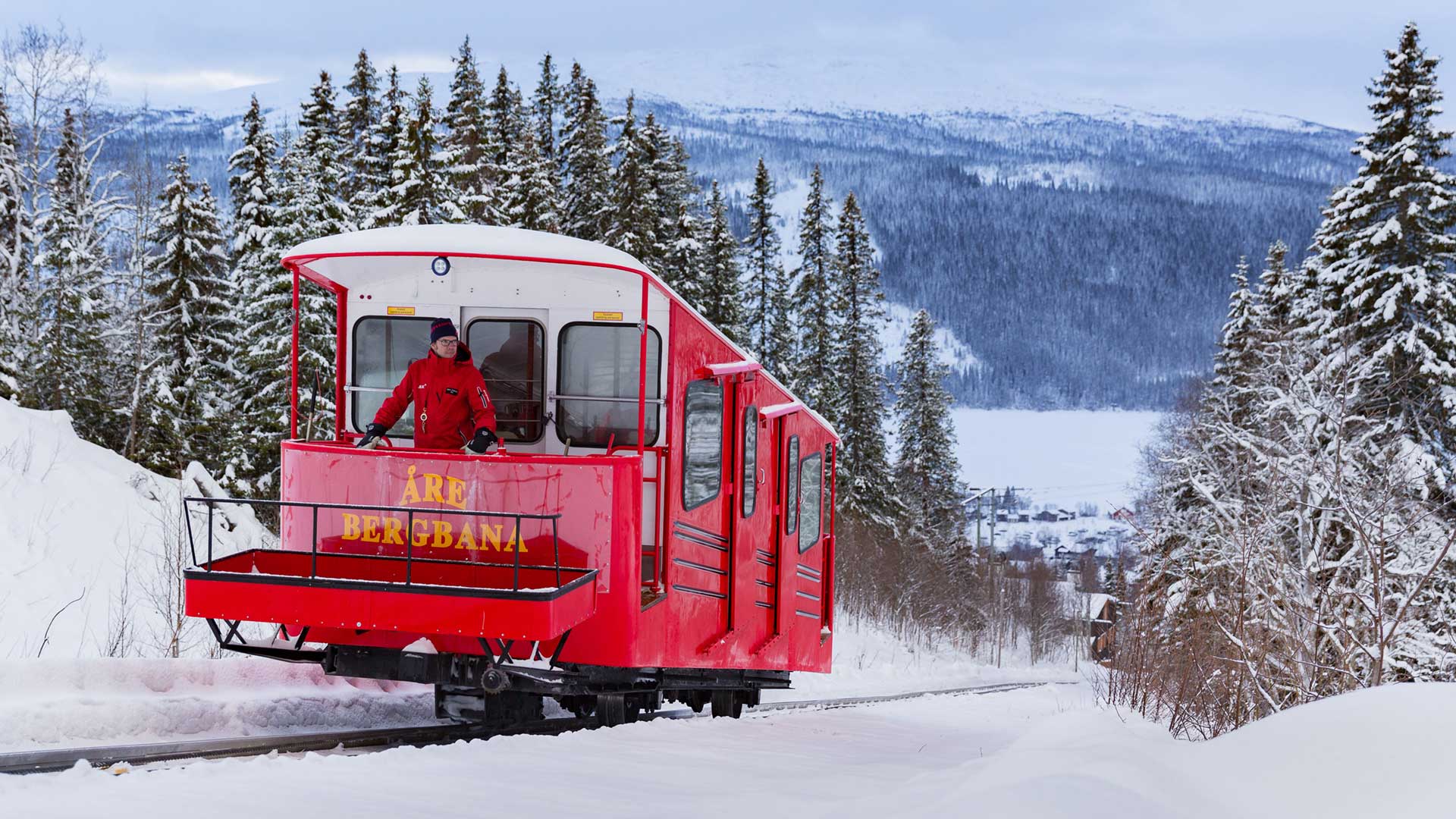
You can follow Åre’s rapid transformation from 1882 to the present day in the timeline below. For an even deeper dive into local history, visit Åre Museum at the upper station of Bergbanan. The museum is open whenever Bergbanan is running.

Explore Åre’s history
More info. Book a guide. Check SkiStar's guided audio tour.
Discover Åre through its history, from its industrial past to the internationally renowned ski destination it is today. Morrvikja offers guided historical walks where Maria Wilhelmsson brings the past to life through stories of the people who lived here and the buildings they built and called home. If you’d rather explore at your own pace, follow either the shorter or longer version of the Husesyn heritage trail, which takes you past some of Åre’s historic buildings.
For a little more of a challenge, hike trail 214 up Åreskutan—or head downhill instead—with SkiStar’s digital guide in your ears, leading you through the mountain’s history along the way. Another option is to follow in the footsteps of the pilgrims, or learn more about the Caroleans and their ill-fated journey across the mountains. Read more here.