

Tännforsen - A Timeless Wonder
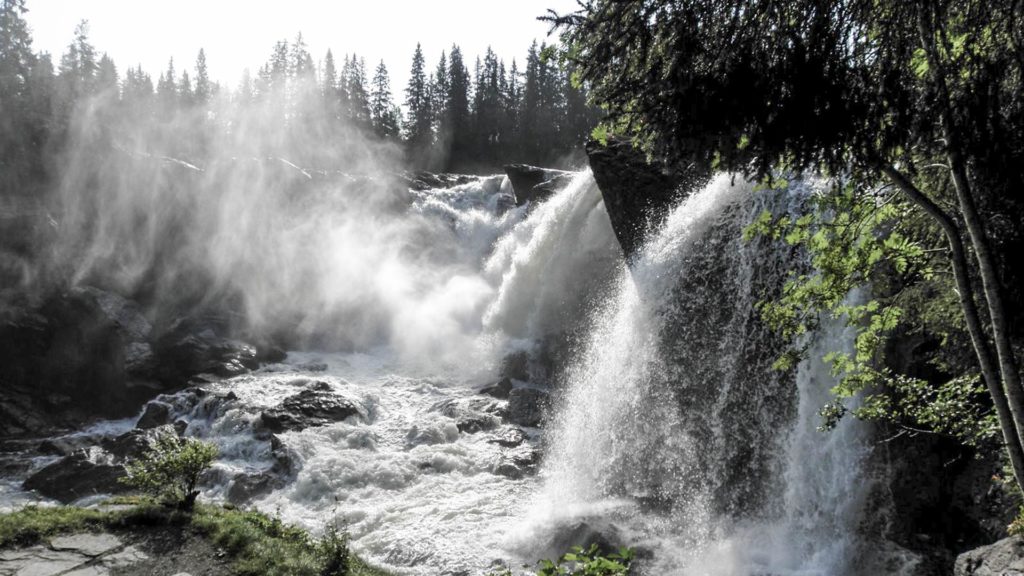
Long before skiers, hikers and cyclists discovered Åre, one of the region’s most iconic natural attractions had already made its mark. Tännforsen Waterfall, part of the mighty Indalsälven river – one of Sweden’s largest waterways – channels torrents of mountain water down towards the Baltic Sea. Just 20 kilometres west of Åre, the water plunges nearly 40 metres into Lake Noren, creating a roaring 60-metre-wide curtain of water that stirs the senses in every season.
How to get there
From Åre, take the E14 westwards towards the Norwegian border. After passing Duved and Duvedsbyn and crossing the bridge across Indalsälven, take a right on road 322 and pass the Golf Club. After circa six minutes of driving on the 322, you’ll see the take-off road towards the tourist station and the waterfall. Parking is available by the tourist station.
WHEN TO VISIT
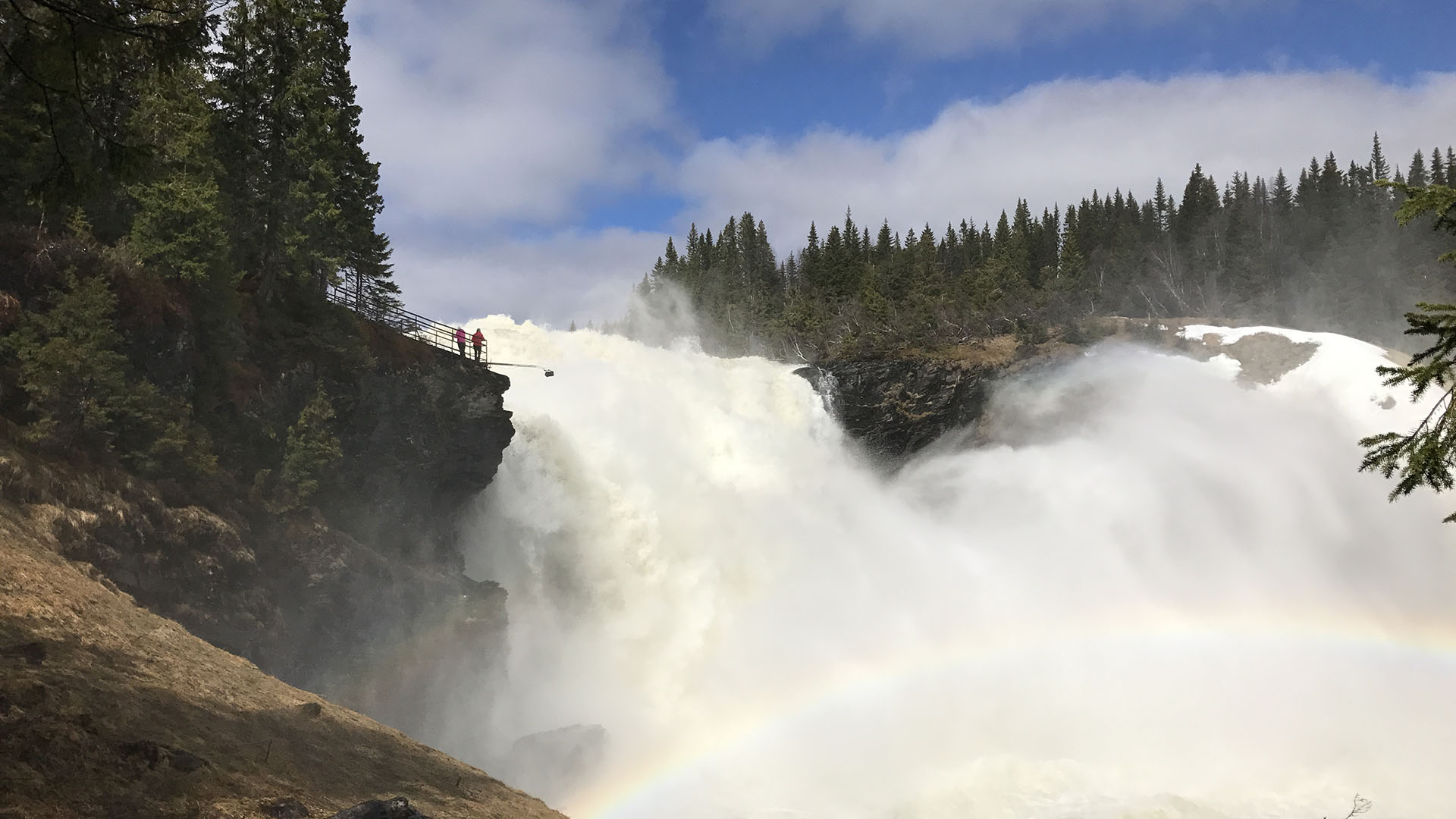
All year round. This is a great experience in winter as well as in summer. In May to June, the water flow is at its peak, during the spring flood.
TIP! Take a guided tour to Tännforsen with pick up at your doorstep.
A Year-Round Spectacle
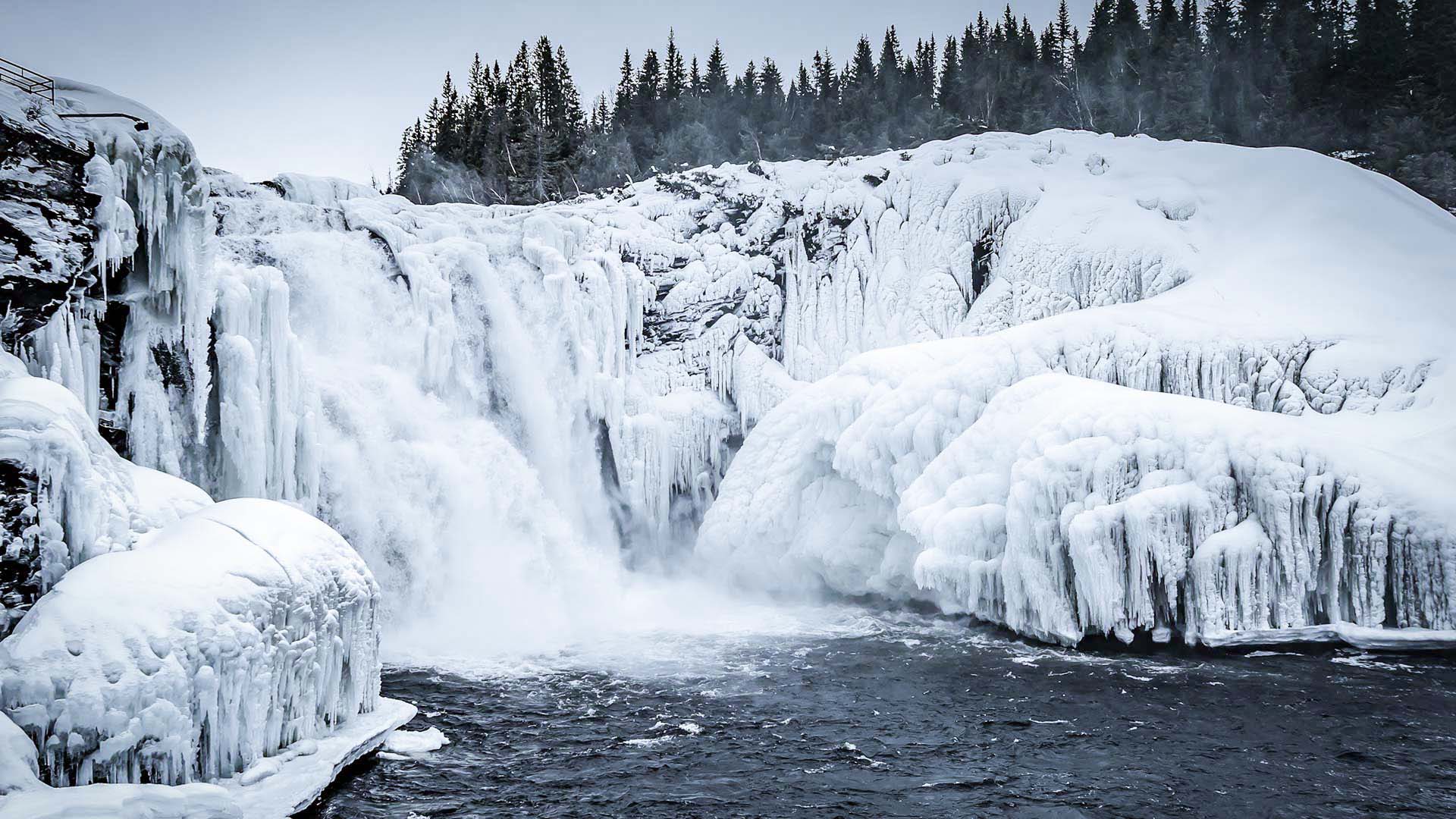
Often referred to as Sweden’s largest waterfall, Tännforsen is easy to reach and rewarding to visit year-round. In winter, it transforms into a frozen sculpture, draped in icy beauty. Sometimes, you can even walk inside the frozen cascade for a surreal experience. In May and June, the spring melt causes the water flow to surge — reaching up to 400 cubic metres per second — and you can physically feel the power of the falls. On sunny days, light reflecting through the mist creates rainbows in the spray. Come autumn, Tännforsen is framed by blazing foliage, crisp blue skies and frothing white water — a true feast for the eyes.
Take the Trail – An Easy Walk
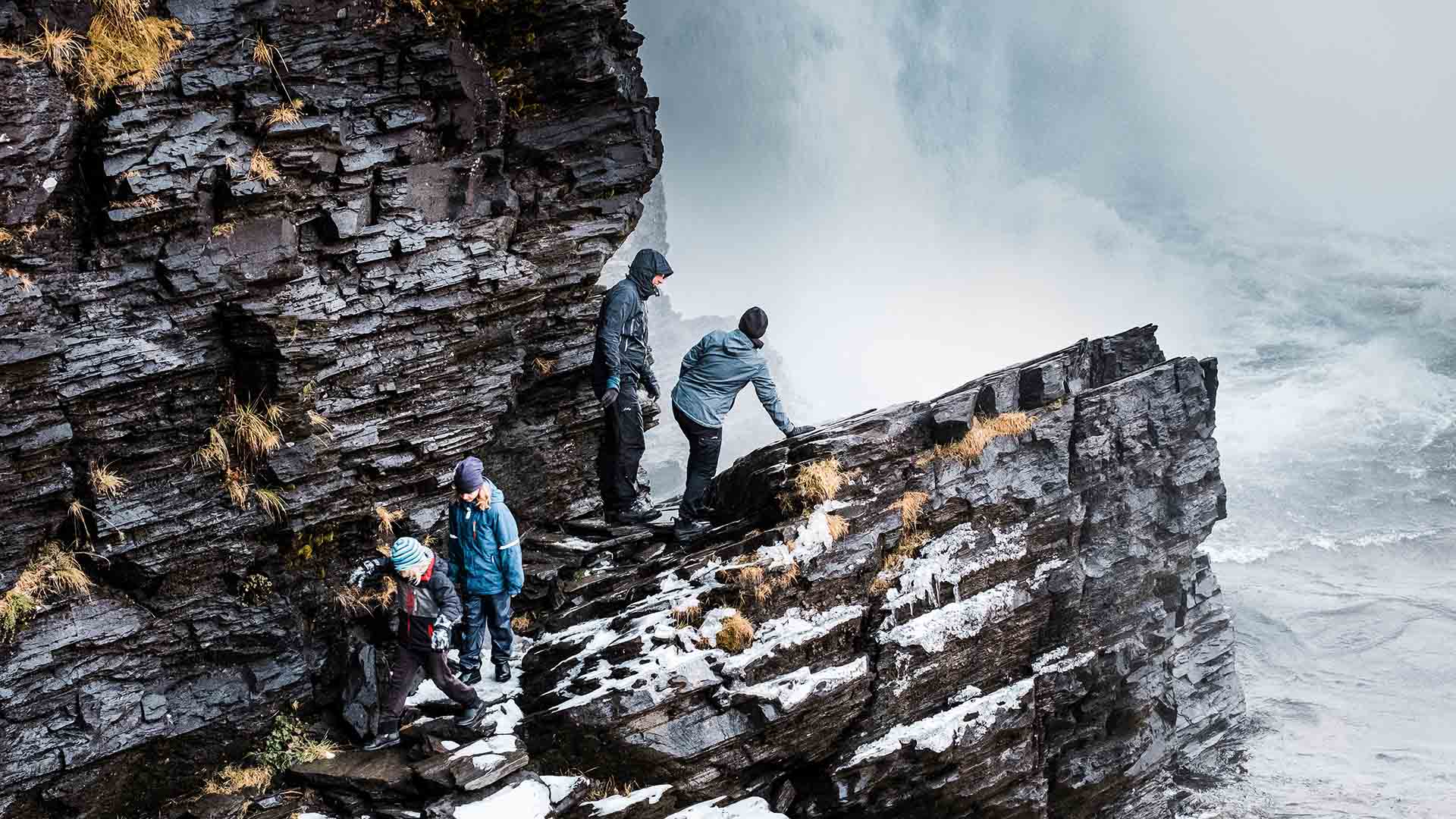
From the car park near the tourist station, you can explore Tännforsen via two scenic routes. Head right and you’ll approach the waterfall from below — the full force of the falls towering in front of you. Go left instead, and you’ll follow the river above the drop, getting a thrilling look over the edge as the water disappears into the depths below. Whichever route you choose, just follow the marked trail to complete a loop back to the car park. Along the way, there are benches where you can sip something warm, soak up the sound of the falls and take in the magical moss-draped forest around you.
A Magical Forest with Rare Species
Tännforsen lies within a protected Natura 2000 area, thanks to its unique and humid microclimate that supports a remarkable range of species. The mist-filled air allows rare mosses, lichens and insects to thrive – including 21 red-listed tree-dwelling lichens and a rare beetle group called short-winged beetles. The “bearded” trees, cloaked in lichen, give the forest an enchanted feel. Pick up a mossy stone – who knows, could it be hiding a stone troll?
Steeped in History
Tännforsen became a travel destination as early as 1835, when King Karl XIV Johan inaugurated the road to Norway. Wealthy travellers would cross Lake Tännsjön by boat to admire the falls from the northern shore. In 1906, the Swedish Tourist Association enhanced access by building a road and establishing a tourist station nearby, making the site even more popular. Guest books from the era are filled with visitors’ tales and awe-struck impressions.
In summer 1953, two daredevils from Järpen made headlines when Calle Thoresson cycled across the falls on a rope, with Kjell Zetterström dangling below him as a counterweight. The rope slackened mid-crossing, briefly plunging Kjell into the water, but the duo made it across to the crowd’s immense relief.
Older photos of Tännforsen show a massive boulder in the middle of the falls — known as Björnstenen (“The Bear Stone”), said to be where a bear once got stuck trying to cross. The stone was swept away during the spring flood of 1992, vanishing without a trace.
Saved from Hydropower
Like many waterfalls, Tännforsen faced the threat of hydroelectric development — most notably in the 1940s, when plans emerged to harness its power. Locals protested passionately, determined to preserve this natural wonder. Their resistance paid off: in 1971, Tännforsen was granted nature reserve status to safeguard it as one of Sweden’s last free-flowing waterfalls. Thanks to their efforts, it remains one of the country’s most visited and cherished natural attractions.
More About Water
Last updated 4 July 2025


